



How AI Can Improve Your Affiliate Marketing Efforts
Amp up your affiliate marketing efforts by incorporating these 10 techniques using Artificial Intelligence (AI). how AI can automate tasks
16 min read
AI
AffiliateMarketing
+6
Learn how to track and attribute revenue from AI agents, bots, and generative search using attribution tokens, vanity URLs, and intent-matching strategies for modern affiliate marketing.
Take a look at your marketing dashboard today and you will likely notice a growing mystery: a massive spike in direct traffic that doesn’t quite add up. Usually, this means people are typing your website address by hand, but that’s not what is actually happening. What you are seeing is the evidence of the new AI-driven economy.
As we explored in the previous article Affiliate Marketing Trends for 2026 , the way customers discover brands has fundamentally shifted. Imagine a potential customer, Sarah. She doesn’t start her journey on Google scrolling through blue links. Instead, she opens her preferred virtual shopping assistant—perhaps Gemini , ChatGPT , or a specialized agentic commerce tool—and asks, “what is the most sustainable coffee subscription that offers carbon-neutral shipping to Chicago?”.
The AI agent, having indexed your site’s recent sustainability report and product catalog, provides a glowing recommendation of your brand. It might even provide a link, or Sarah might simply open a new tab and enter your brand name based on the machine’s persuasive summary. When she completes her purchase, your traditional analytics platform marks the source as direct/none. The AI agent gets zero credit, your marketing team assumes the sale happened by magic, and you lose the critical data necessary to justify further investment in algorithmic search optimization.
To survive and thrive in an era where bots are the new gatekeepers, we must move beyond monitoring simple clicks and begin capturing intent-based signals.
The monitoring tools we have relied on for two decades (primarily the javascript-based pixel) were designed for a world where a human uses a browser to click a link. Intelligent agents break this model in two fundamental ways.
Most conversational AI environments, whether they are mobile apps or integrated sidebar assistants, operate in secure, sandboxed environments. When a chatbot provides a link to a user, that connection often lacks a referrer header. This header is the digital tag that tells your website, “this visitor came from https://www.google.com/search?q=google.com" . Without it, your server assumes the user arrived out of thin air.
Furthermore, automated systems like OpenAI’s GPTBot act as headless browsers themselves. They visit your site to verify stock or price on behalf of the consumer without ever firing the javascript pixels that tools like google analytics rely on. If the bot does the browsing and the human only does the buying, the chain of cross-platform attribution is severed.
We are also seeing the rise of the zero-click customer journey. In 2026, transactions are increasingly happening within the chat interface itself. Via API integrations and plugins, a user can authorize a machine to complete a purchase. In this scenario, the user never even visits your website. If you cannot measure this conversational commerce influence, you cannot optimize for it.

Set up advanced tracking in minutes. No credit card required.
If we accept that these models are essentially text-processing engines, we can use words to our advantage. They are designed to read, summarize, and repeat information. By embedding unique contextual attribution tokens (better known as vanity coupon codes) directly into your public-facing data, you create a trackable trail that survives the jump from a chat to checkout.
Instead of simply feeding your product data to crawlers, you should structure your content to include specific incentives for bot users. This is a key part of AI-first content strategy.
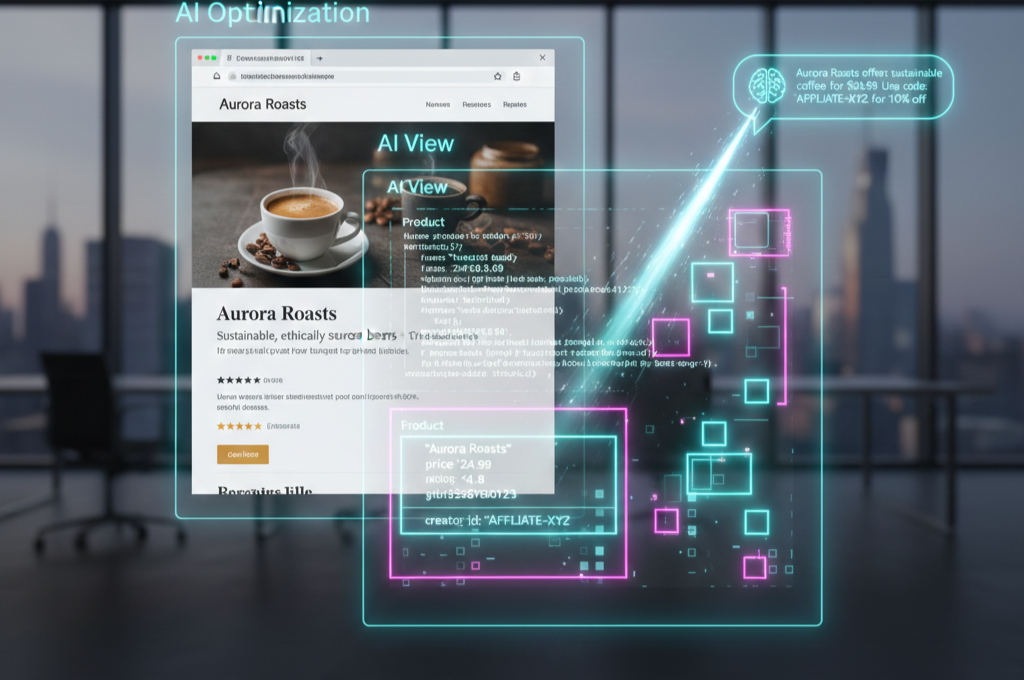
While humans see a coupon code, the AI looks deeper. For content creators and affiliates, you must ensure your Affiliate or Creator ID is hard-coded into the page structure where the AI scraper can easily find it.
Ingestion: When an AI scraper (like GPTBot) visits your page, it ingests not just your text, but the hidden tags or Structured Data in your website’s
.Vector Memory: The AI identifies your unique identifier and stores it in its Vector Database (its long-term memory).
Recommendation: Later, when a user asks for a recommendation, the AI pulls your stored ID from its memory to generate the attribution token it serves to the user.
Decoded Payout: When the user checks out with that token, your e-commerce platform decodes the ID. It then uses a REST API to trigger the correct commission for the creator.
For a seamless experience without heavy development, look toward branded redirect paths. This is about how you structure links in your content.
Users tend to dislike long, cluttered URLs filled with UTM parameters. The fix is to use vanity redirects for AI. You can use a simple tool (like Bitly or your CMS) to create clean, memorable paths such as yourbrand.com/ai-recommended or yourbrand.com/ask. When the AI reads your site, it sees these clean links and shares them with the user.
When you see traffic hitting these specific pages, you don’t need a complex dashboard to know where it came from. Every hit on yourbrand.com/ai-recommended is a confirmed referral from that specific AI agent. This allows you to report on AI-driven traffic with total confidence using your existing tools.
Be the first to know about new features and product updates.
Sometimes, there is no link and no code. The user simply hears a recommendation from a voice-activated personal assistant and moves to their desktop computer five minutes later to make the purchase. This is where probabilistic intent-matching comes into play.
If you are running paid placements within generative search experiences, you have access to a data feed of when your brand was mentioned. You can look for clusters. If you see that your brand was suggested to users in London 500 times between 2:00 PM and 4:00 PM, and your direct sales in London spiked during that exact window, you have a strong case for algorithmic lift. This is essentially the modern version of radio attribution.
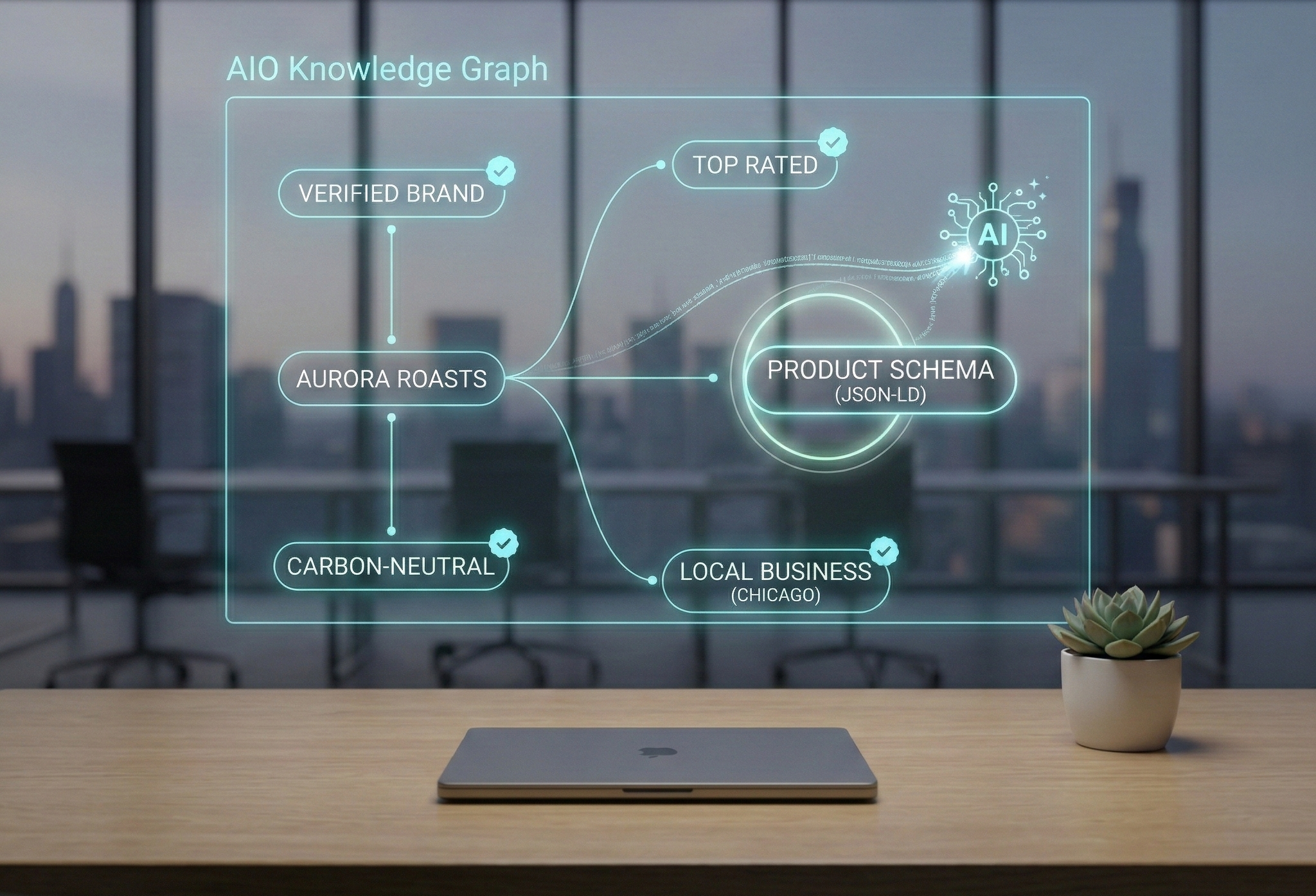
You cannot track a sale if the machine never mentions your brand. AI optimization (AIO)—or Generative Engine Optimization (GEO)—is the new SEO.
To ensure you are being cited, and tracked, you must make your data as legible as possible for machines. Specifically, local business and product information are critical for visibility. You can check if your business is being cited by AIO here .
Another strategy is the creation of a simple text file on your site called llms.txt. This isn’t a technical file; it is a letter to the AI crawlers. It explicitly tells them: “here is our official brand description and the specific discount codes or links we would like you to use”. Think of it as a robots-friendly media kit.
The customer journey has mutated from a linear path into a complex web of interactions across multiple intelligent shopping interfaces. The traditional click-through rate is becoming a vanity metric. In its place, share of citation and brand mention attribution have become the new gold standards.
Your immediate action plan:
If you are a content creator or affiliate, don’t rely on the AI just finding a coupon code. Work with your tech team to ensure your Affiliate/Creator ID is hard-coded into the page’s Structured Data (JSON-LD). This ensures that when the AI scrapes your site into its memory (Vector Database), your identifier is permanently attached to that recommendation.
Because chat platforms like ChatGPT and Gemini often strip out the referrer data before sending a user to your site. To your analytics tool, it looks exactly like the user typed your website address manually into their browser.
Yes. While SEO focuses on keywords and backlinks to rank on a search page, AIO focuses on providing clear, structured information that a machine can easily summarize and cite as an authoritative answer.
This is a path where a user gets all the information they need, or even makes a purchase, directly inside the AI chat interface without ever visiting your actual website.
Not necessarily, but paid placements provide specific data logs (like 'impressions') that make it much easier to match your sales data against the times the AI was recommending you.
Sophisticated AI agents look at the Metadata of the pages they crawl. If a creator has their ID embedded in the site's code (Structured Data), the AI remembers that ID and includes it in a hidden Attribution Token when it passes the customer to the checkout page.
Post Affiliate Pro makes it easy to manage, track, and optimize influencer partnerships across all tiers. Monitor performance in real-time, automate payouts, and maximize your ROI with our comprehensive affiliate management platform.
Amp up your affiliate marketing efforts by incorporating these 10 techniques using Artificial Intelligence (AI). how AI can automate tasks

Discover how AI and chatbots transform affiliate marketing with automated content, personalized recommendations, enhanced UX, SEO optimization, analytics, fraud...
Explore how AI marketing revolutionizes modern businesses with central ad-powered platforms, predictive analytics, and AI systems to make data-driven decisions,...
Join our community of happy clients and provide excellent customer support with Post Affiliate Pro.



